Against the Calendar: How American Ateliers Are Quietly Dismantling Fashion's Seasonal Machine

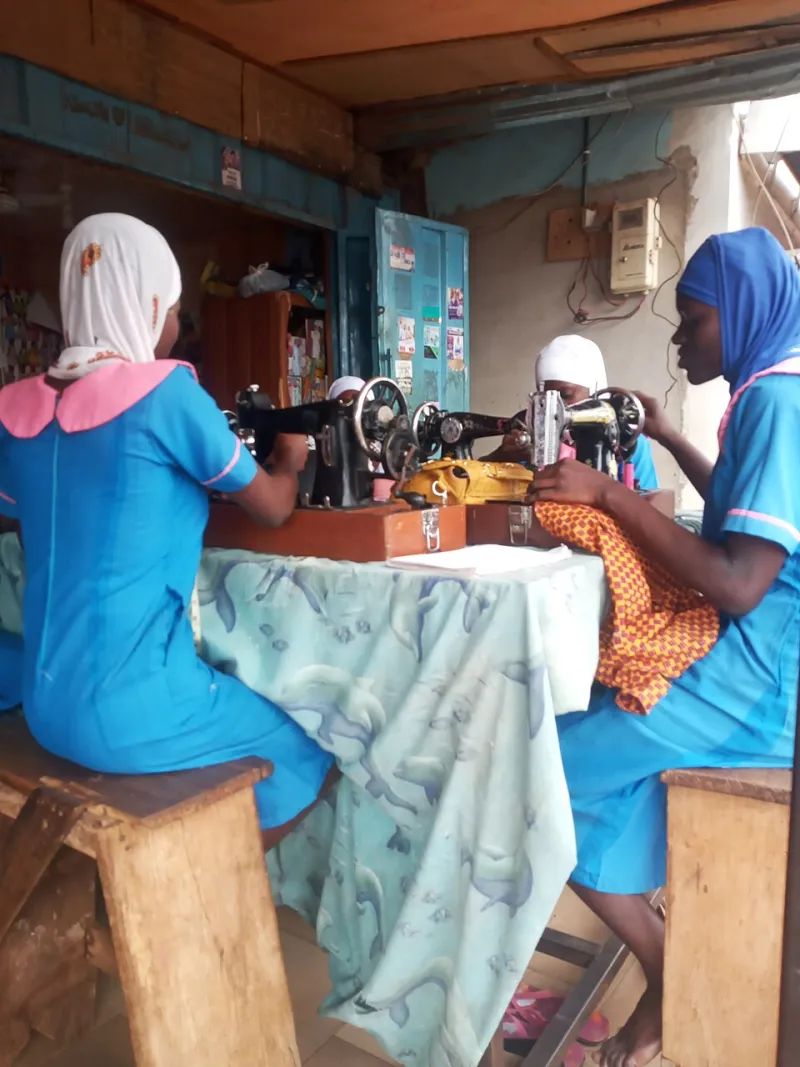
Photo: bespoke tailor atelier workshop fabric selection sustainable luxury craftsmanship, via res.cloudinary.com
The fashion calendar, as it has operated for the better part of a century, is a remarkable feat of synchronized pressure. Twice a year—more often in recent decades—brands produce collections that must be designed, manufactured, distributed, and sold within windows so compressed that the entire system depends on anticipation: predicting what consumers will want months before they know it themselves. The consequences of getting that prediction wrong are measured in tons of unsold inventory, discounted through outlet channels, or quietly destroyed.
Against this backdrop, the American couture atelier operates according to an entirely different logic—one that is drawing increasing attention not only from clients and makers but from economists, sustainability researchers, and supply chain analysts who recognize in it the outline of a genuinely different industrial model.
A System Built on Demand, Not Speculation
The foundational distinction between bespoke production and conventional fashion manufacturing is deceptively simple: nothing is made until it is commissioned. There are no speculative cuts, no warehouse stockpiles, no production runs calibrated to demographic projections. When a client approaches an atelier with a commission, the supply chain activates in response to a specific, confirmed need. When the commission is complete, the chain goes quiet again.
This demand-first architecture eliminates entire categories of waste that are structurally embedded in conventional luxury production. There is no overstock to liquidate. There are no end-of-season markdowns that erode brand positioning. There is no fabric ordered in excess of what the commission requires—or, when there is, it is carefully catalogued and retained for future use rather than discarded.
For atelier owners operating in cities like New York, Los Angeles, and Chicago, this model is not primarily a sustainability strategy; it is simply the practical reality of how bespoke work functions. The environmental benefits are, in many cases, a consequence of operational discipline rather than a deliberate design. But consequences matter regardless of their intent, and the numbers associated with this approach are increasingly difficult to ignore.
The Supply Chain Implications of Client-Driven Production
Conventional fashion's supply chain is long, opaque, and optimized for volume. Raw materials move from farms and chemical plants to spinning mills to fabric manufacturers to cut-and-sew operations spread across multiple continents, often with limited visibility at any single point in the chain. The atelier supply chain, by contrast, tends to be short, legible, and relationship-based.
A couture workshop sourcing wool from a specific mill in the American Pacific Northwest, or commissioning buttons from a family-owned manufacturer in New England, maintains direct relationships with suppliers who are themselves operating at human scale. These relationships allow for quality verification that is impossible to perform at distance or volume. They also create accountability structures that are largely absent from globalized fast fashion.
When an atelier owner knows the name of the person who wove the cloth for a client's commission, and that weaver knows where the cloth is going and for whom, the supply chain becomes something closer to a community of practice than an anonymous industrial process. The economic implications of this are significant: more of the value generated by the garment remains within networks of skilled makers rather than being extracted by intermediaries.
Rethinking the Economics of Luxury Production
Critics of the bespoke model sometimes argue that its virtues are accessible only to the wealthy, and that its environmental benefits are therefore irrelevant to the broader challenge of sustainable fashion. This critique contains a partial truth but misses a more important point.
The economics of couture production are not simply a scaled-up version of mass-market economics. The price of a bespoke garment reflects, in full, the cost of skilled labor, quality materials, and extended production time. There are no hidden subsidies in the form of suppressed wages, environmental externalities, or the artificial cheapening of materials through volume purchasing. The garment costs what it actually costs to make well.
This transparency has consequences that extend beyond the individual transaction. When clients pay the true cost of exceptional craft, they are participating in an economic model that can sustain skilled makers, support domestic textile production, and maintain the knowledge base required to produce garments of genuine quality. The bespoke atelier, in this sense, is not merely a luxury service. It is a proof of concept for production economics that assign full value to human skill and material integrity.
Several sustainability researchers working in the fashion space have begun to make precisely this argument—that the atelier model, however elite its current clientele, represents a template worth studying for what it demonstrates about the relationship between price, quality, and waste. When a garment is expensive enough to be cared for, preserved, and ultimately passed on, it exits the consumption cycle that makes fashion one of the world's most resource-intensive industries.
Eliminating the Season, Preserving the Standard
Perhaps the most radical aspect of the atelier model is its indifference to trend. A couture workshop does not produce a fall collection or a resort line. It produces commissions, each of which is calibrated to the individual client's body, aesthetic, and life rather than to a seasonal narrative constructed by a marketing department.
This indifference to trend is not aesthetic conservatism. Ateliers are capable of producing work that is formally adventurous, culturally engaged, and entirely contemporary. What they are not capable of—by the nature of their process—is producing work that chases a trend cycle operating on a timeline incompatible with careful construction. The bespoke garment takes the time it takes. It cannot be rushed to meet a retail window.
For clients who have grown weary of a fashion system that seems designed to generate dissatisfaction as reliably as it generates desire, this temporal independence is itself a form of luxury. To commission a garment without reference to what is currently fashionable, and to receive it when it is genuinely finished rather than when the calendar demands, is to opt out of a system whose primary product is not clothing but urgency.
At SGBG Atelier, we have long understood that the most enduring wardrobes are built not in response to seasons but in response to a coherent personal vision. The growing recognition that this approach also carries meaningful economic and environmental logic is not a surprise to those who have practiced it. It is simply the rest of the world catching up to what careful dressers have always known.