Before the First Stitch: A Discerning Client's Guide to the Atelier Consultation
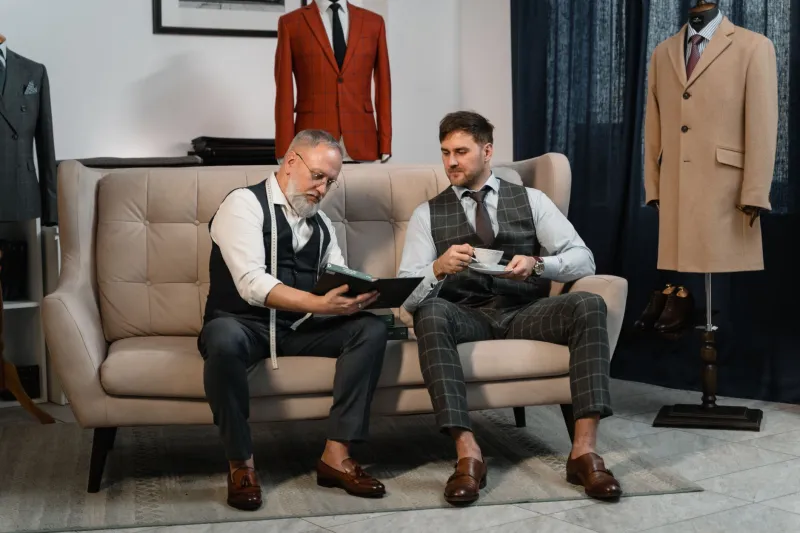
There is a particular kind of anticipation that precedes a first atelier consultation. It is not the transactional excitement of a retail purchase, nor the passive pleasure of browsing a catalog. It is something closer to the feeling before a significant conversation — the sense that what transpires in the next hour may shape years of decisions to come.
For those approaching bespoke tailoring for the first time, that anticipation can also carry uncertainty. What should you say? What should you bring? How do you communicate a vision that may exist more as feeling than as language? And perhaps most critically: how do you distinguish a maker of genuine mastery from one who has simply mastered the vocabulary of luxury without the substance to support it?
The answers begin before you ever set foot in the studio.
Arrive With Material, Not Just Ideas
The most effective clients come prepared — not with rigid directives, but with tangible reference points. A collection of photographs, whether sourced from editorial archives, personal travel, or even images of garments you already own and love, gives a skilled maker far more to work with than abstract descriptions alone.
This does not mean arriving with a mood board assembled overnight. It means spending genuine time in reflection before the appointment. Consider the contexts in which you will wear this garment. Think about the occasions that currently feel underserved by your existing wardrobe. Bring a piece you already own that fits exceptionally well — even if it is off-the-rack — because fit data extracted from a beloved garment is among the most useful information a tailor can receive.
If you have photographs from periods in your life when you felt most confident in how you presented yourself, those are worth bringing too. A skilled atelier professional reads not just measurements but the entire visual grammar of a person's relationship with clothing.
The Questions That Reveal a Maker's True Character
The consultation is a two-way evaluation. You are not simply presenting yourself to be assessed — you are assessing the maker with equal rigor. The questions you ask will tell you as much about the atelier as any portfolio or testimonial.
Begin with process. Ask how many fittings are typically required before a garment is completed. A serious bespoke house will rarely complete a complex commission in fewer than two or three fittings; anything that sounds suspiciously expedient deserves follow-up. Ask who will be cutting the pattern — whether it is the person you are speaking with or a separate craftsperson — and how the atelier handles communication between those stages.
Ask about cloth sourcing. A maker who cannot speak fluently about the mills they work with, the specific weights and weaves they favor for different purposes, or the reasons they choose one fabric house over another is likely operating at a remove from true craftsmanship. The best ateliers have relationships with their suppliers that mirror their relationships with their clients: long, deliberate, and built on mutual respect.
Ask, too, about past challenges. How does the atelier approach a client whose proportions fall outside standard ranges? What happens if a finished garment does not meet the client's expectations? A maker who responds to these questions with confidence and specificity — rather than reassurance and deflection — is one who has genuinely grappled with the complexities of their craft.
How to Communicate a Vision You Cannot Yet Fully Articulate
One of the most common anxieties among first-time bespoke clients is the fear of being inarticulate. Fashion has its own lexicon, and many people who care deeply about how they dress have never had occasion to learn it. The right atelier will not require you to arrive fluent in that language.
What matters more than terminology is honesty about feeling. Describe how you want to feel in the garment — authoritative, at ease, quietly exceptional — rather than straining to specify technical details you are not yet equipped to name. A skilled maker will translate emotional language into structural decisions. That translation is, in fact, a central part of what you are commissioning.
It is also entirely appropriate to describe what you do not want. Clients who can articulate their aversions — an intolerance for anything that reads as fussy, a preference for restraint over embellishment, a history of feeling overwhelmed by structured shoulders — give their maker equally useful information. Negative space is as meaningful in tailoring as it is in design.
The Red Flags Worth Recognizing
The American luxury market has expanded considerably, and with that expansion has come a proliferation of studios that present the aesthetic of bespoke without its essential substance. Recognizing the difference protects both your investment and your time.
Be cautious of any atelier that rushes the consultation. A maker who seems eager to move quickly from introduction to measurement is one who may view the conversation as a formality rather than a foundation. The consultation is where a serious craftsperson learns whether they can genuinely serve you — and where they earn the right to try.
Be equally attentive to how the maker speaks about price. Transparency about cost — including what drives it, how it is structured, and what distinguishes their pricing from less expensive alternatives — is a mark of confidence. Vagueness, or a tendency to speak about value in marketing language rather than craft language, suggests a studio more practiced in selling than in making.
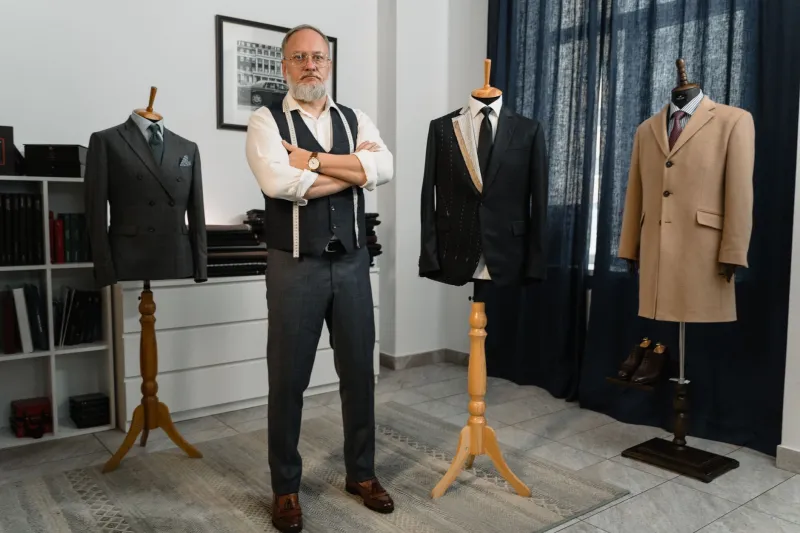
Finally, pay attention to the physical environment. A working atelier bears the evidence of its work: fabric samples in organized abundance, tools in active use, the particular quality of light that suggests the space was designed for precision. A studio that looks more like a boutique than a workshop may have inverted its priorities.
When You Know You've Found the Right Maker
The right maker will make you feel, by the end of the consultation, that they understand something about you that you had not yet fully articulated yourself. Not because they have flattered you — flattery is easy and costs nothing — but because they have asked the right questions, listened with genuine attention, and reflected back a vision of what the garment could be that feels both surprising and inevitable.
That quality — the ability to hear what a client means beneath what they say — is among the rarest in any creative field. When you encounter it, you will recognize it not as a transaction completed, but as a collaboration begun.
The first stitch has not yet been made. But the foundation for something lasting has been laid.