Fluent in Craft: How the Atelier Vocabulary Transforms the Way Clients Dress
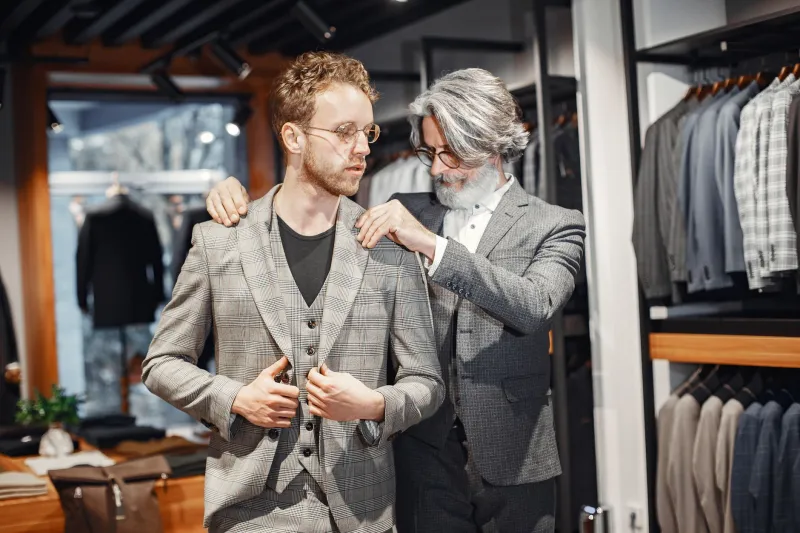
There is a moment, familiar to any seasoned atelier client, when the conversation shifts. It happens somewhere between the first consultation and the third fitting—perhaps during a discussion about the drape of a chest canvas, or while deliberating over the relative merits of a floating versus a fused lapel. The client, who once arrived with little more than a vague sense of what they wanted, begins to speak with quiet precision. They reach for terms they did not know six months prior. They ask questions that reveal genuine comprehension. In that moment, something more than a garment has been made.
The vocabulary of fine craft is not merely technical shorthand. It is, in the truest sense, a new way of seeing.
The First Words: Learning to Name What You Already Feel
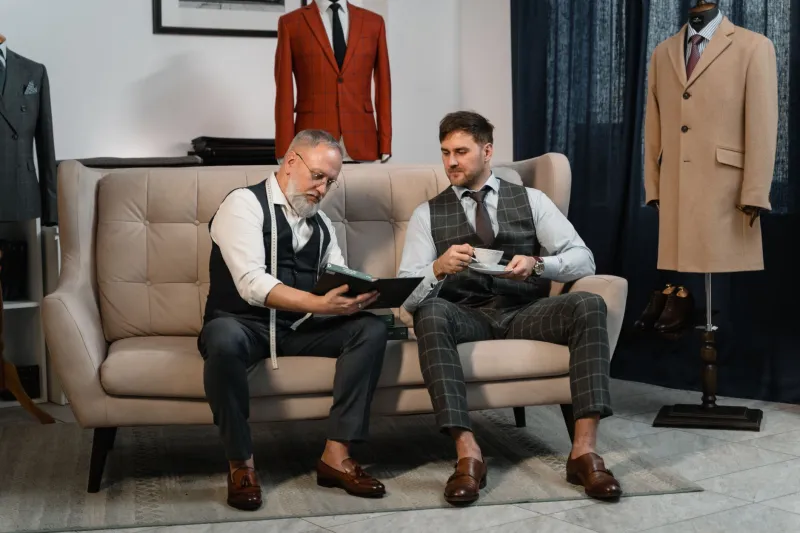
Most clients enter the atelier with an aesthetic instinct they cannot yet articulate. They know what they like—a certain weight to a jacket's shoulder, a particular way a trouser breaks over the shoe—but they lack the language to describe it. The initial consultation, then, is as much about building a shared lexicon as it is about gathering measurements.
When a skilled craftsperson introduces terms like pick stitching, basting, or sleeve pitch, they are not performing expertise. They are extending an invitation. Each word is a handle, something a client can grasp and carry forward. A client who learns what pick stitching means—the hand-sewn running stitch that traces the edge of a lapel, simultaneously functional and decorative—will never again look at a lapel the same way. They will begin to notice it everywhere, on their own garments and others'. They will develop a preference. And that preference will inform every commission that follows.
This is the quiet gift of atelier education: it does not simply teach clients what to ask for. It teaches them what to notice.
Fabric as a First Language
Of all the domains within couture craft, fabric carries perhaps the richest vocabulary—and the steepest learning curve. Thread counts, weave structures, fiber origins, and seasonal weights each carry their own terminology, and mastering even a portion of it changes the way a client engages with their wardrobe.
Consider the difference between a client who selects a wool because it looks nice and one who understands the distinction between a Super 150s and a Super 120s—knowing that the former offers a finer hand but demands more careful maintenance, while the latter provides greater resilience for daily wear. Or the client who can distinguish between a hopsack and a fresco by feel alone, understanding that both are open-weave summer worsteds but that the fresco's twisted yarns offer a crisper recovery. These are not trivial distinctions. They are the difference between a garment that serves its owner for a decade and one that disappoints within a season.
American clients, in particular, often arrive with a cultural context that prizes practicality. Learning the language of fabric gives that practical instinct a precise vocabulary. It allows a client to say, with confidence, that they want a mid-weight cavalry twill for a traveling trouser—not because they are performing connoisseurship, but because they have come to understand exactly what that specification will deliver.
Construction Speak: The Architecture Beneath the Surface
If fabric vocabulary describes what a garment is made of, construction terminology describes how it holds together—and why that matters. For many clients, this is the most transformative area of atelier education, because it renders visible what was previously invisible.
The distinction between a full canvas and a half canvas chest construction, for example, is one that most ready-to-wear consumers never encounter. Yet understanding it—knowing that a full canvas allows a jacket to mold to the body over time, developing what tailors sometimes call a memory, while a fused chest remains static—fundamentally alters how a client evaluates any jacket they try. The same is true of terms like baste fitting, forward balance, suppression, and gorge line. Each one describes a specific decision with specific consequences, and a client who understands these decisions becomes an active participant in their own dressing, rather than a passive recipient of someone else's choices.
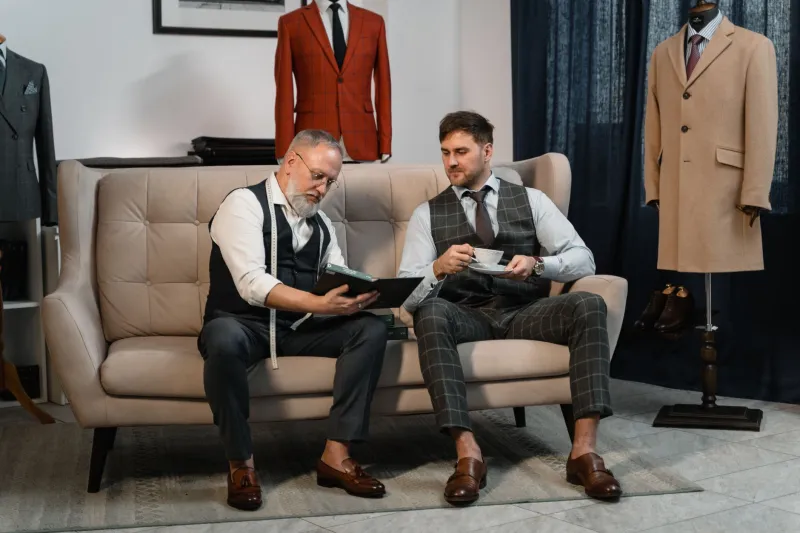
This participatory quality is central to the atelier philosophy. The craftsperson brings technical mastery; the client brings self-knowledge. The shared vocabulary is what allows those two forms of expertise to meet.
The Deeper Fluency: Aesthetic Literacy
Beyond the technical, there is a subtler dimension of atelier language that develops over time—what might be called aesthetic literacy. This is the capacity to articulate not just what a garment is made of or how it is constructed, but what it communicates, and why.
A client who has spent several years in a bespoke relationship begins to develop a vocabulary for proportion, tone, and occasion. They learn to describe the visual weight of a cloth pattern relative to their frame. They understand why a rope shoulder reads as more formal than a natural shoulder, and when that formality serves them. They can discuss the difference between a garment that is understated and one that is merely plain—a distinction that matters enormously in the context of investment dressing.
This aesthetic fluency extends beyond the atelier itself. Clients who have developed it find that they become more discerning across all their purchasing decisions, not just bespoke commissions. They begin to apply the same evaluative lens to ready-to-wear, to vintage acquisitions, to the clothes they already own. The vocabulary, once learned, cannot be unlearned.
A Conversation That Never Ends
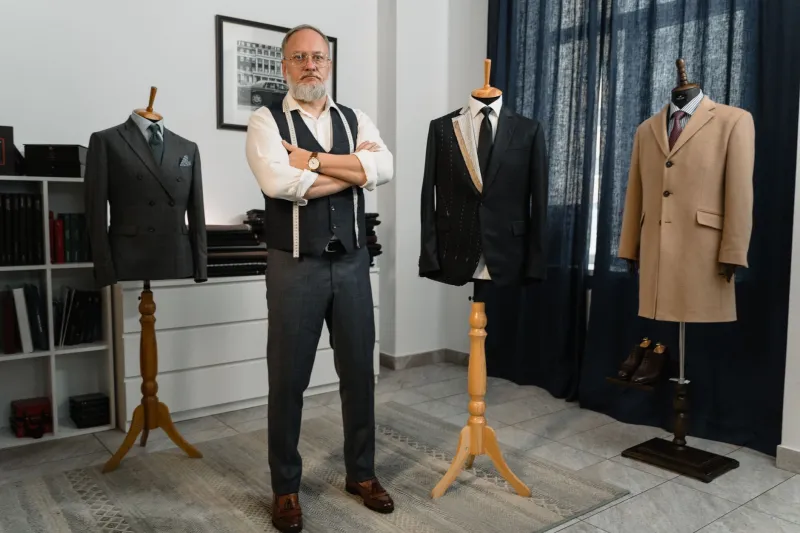
Perhaps the most meaningful aspect of the atelier vocabulary is that it is never finished. The language of fine craft is living and expansive; there is always another technique to understand, another cloth to learn, another construction question worth asking. Long-term atelier clients often describe their relationship with their craftspeople as one of ongoing education—not in a formal sense, but in the way that any deep, sustained conversation teaches both parties something new.
At its best, this is what the bespoke relationship offers: not just extraordinary garments, but an extraordinary way of engaging with the material world. A client who speaks the language of craft does not simply own a wardrobe. They understand it—its decisions, its compromises, its aspirations. And in that understanding, they wear it differently.
Fluency, after all, is not about accumulating words. It is about arriving at meaning.