The Great Migration: Why Master Tailors Are Leaving Fashion Conglomerates for Independent Ateliers
Something significant is shifting beneath the polished surface of American luxury fashion. The most gifted hands in the industry—those who once considered a post at a storied European house the pinnacle of a career—are quietly, deliberately choosing something smaller, more intimate, and ultimately more honest. This is not a retreat. It is a reckoning.
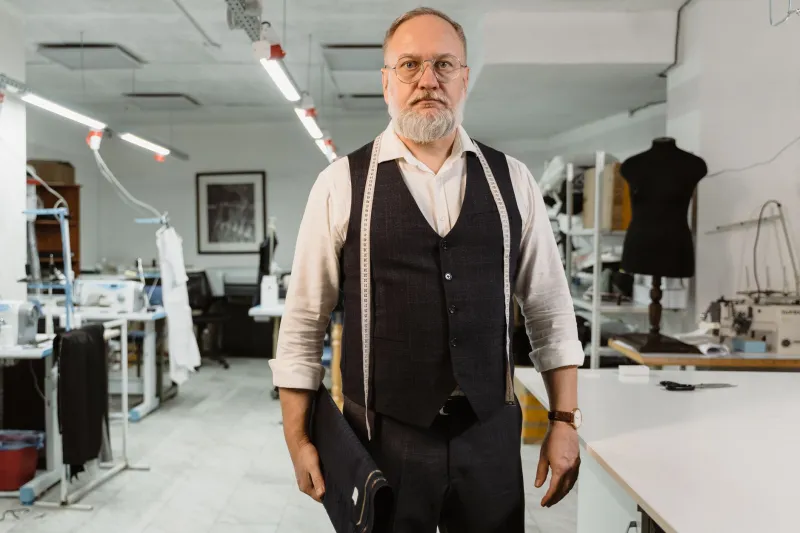
Across the United States, independent ateliers and emerging luxury studios are welcoming a new class of recruit: the seasoned master tailor, the premier-main with thirty years of institutional knowledge, the patternmaker whose drafts once shaped the silhouettes of global fashion weeks. They are arriving not because they were displaced, but because they chose to leave. Understanding why they left—and what they found when they arrived—illuminates where couture's most vital creative energy now resides.
The Conglomerate Promise, and Its Limits
For decades, the proposition was straightforward. A gifted maker who secured a position within a major fashion house gained access to extraordinary resources: rare textiles sourced from mills that supplied no one else, workrooms staffed by specialists whose skills had been refined across generations, and the incomparable prestige of a name that carried weight in every major city on earth. To work within such a structure was, by any conventional measure, to have arrived.
Yet the architecture of that world has changed considerably. As luxury conglomerates have consolidated, the pressure to produce—at volume, on schedule, and within margins that satisfy shareholders rather than craftspeople—has intensified. Seasonal cycles have accelerated. The distance between a designer's original vision and what ultimately enters production has widened. And the individual maker, however skilled, has found her role increasingly subdivided, her contribution increasingly anonymous.
What was once a vocation has, in many of these environments, become a function.
What Independent Studios Are Offering Instead
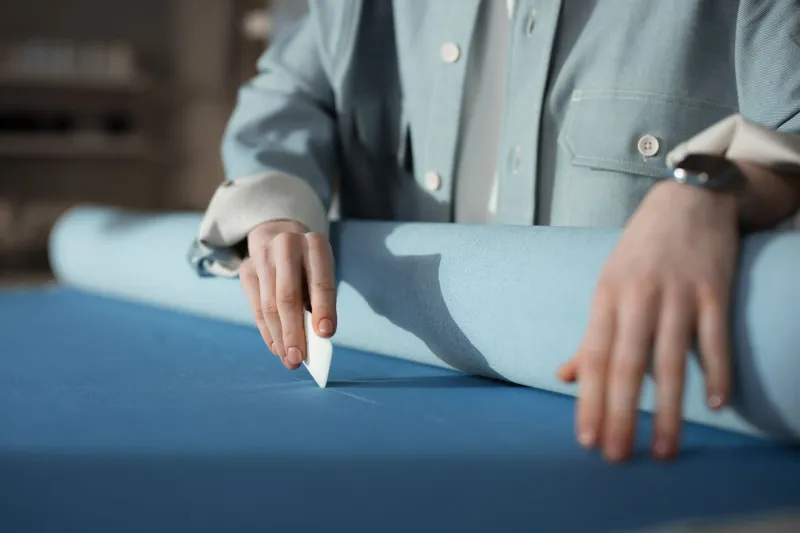
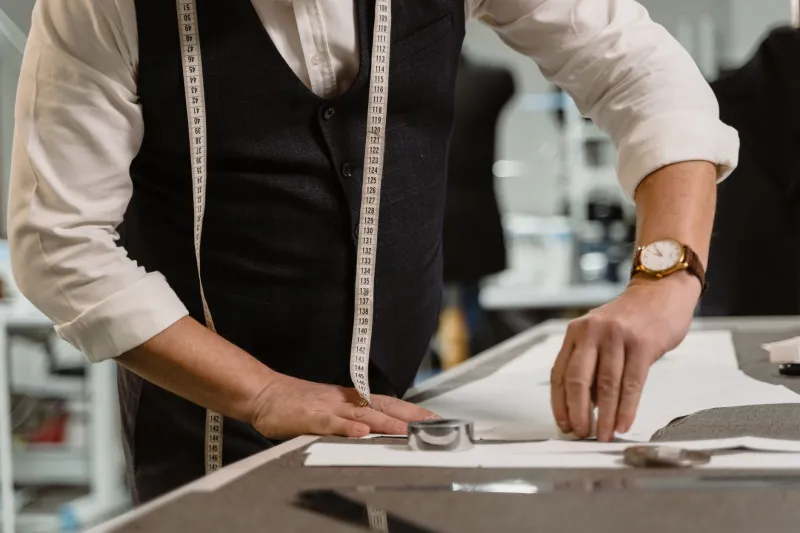
The independent atelier cannot match the resources of a global conglomerate. It does not try to. What it offers instead is something that no budget line can quantify: consequence. In a bespoke studio, every decision made at the cutting table has a direct and traceable relationship to the finished garment. The maker knows the client. The maker knows the cloth. The maker knows, in a way that is simply not possible within a production hierarchy, exactly what each choice will yield.
For craftspeople who entered this field because they loved the work itself—the problem-solving inherent in a complex construction, the satisfaction of a collar that falls precisely as intended—this directness is not a small thing. It is, for many, the entire point.
Several prominent American ateliers have, over the past five years, quietly built their workrooms around precisely this appeal. Rather than competing on the terms that large houses set, they have created environments where mastery is not merely employed but genuinely celebrated. Where a senior tailor's opinion about a construction method is solicited and respected. Where slowing down is not a liability but a core value.
The Philosophy Behind the Movement
There is a philosophical dimension to this migration that deserves attention. The craftspeople making this transition are not simply seeking better working conditions, though those matter. Many articulate something closer to a moral position: a belief that the work of couture carries obligations that the industrial model cannot honor.
True bespoke construction—the kind that begins with a client's specific body, specific life, and specific needs, and ends in a garment that could not have existed for anyone else—demands a quality of attention that is incompatible with speed and volume. When a maker accepts that a house's seasonal imperative will determine how much time she may spend on a given piece, she has, in a meaningful sense, accepted a compromise that works against the very thing that makes her skill valuable.
Leaving, for many of these craftspeople, is an act of professional integrity.
What This Means for American Luxury
The consequences for the American luxury market are already visible to those paying attention. Independent ateliers that have successfully attracted makers of this caliber are producing work of a quality that was, a generation ago, largely inaccessible outside of a handful of European cities. The knowledge that once flowed exclusively through the channels of established houses is now distributed across a wider, more varied landscape.
This is not without its complications. The independent atelier model is fragile in ways that large institutions are not. It depends on relationships—between maker and client, between studio and supplier—that take years to build and can be disrupted by circumstances entirely outside anyone's control. The craftspeople who choose this path accept a degree of professional risk that a salaried position within a conglomerate does not require.
And yet the work being produced in these smaller, quieter environments increasingly speaks for itself. Clients who have access to both worlds—who can commission from an independent American atelier or from a celebrated international house—are, with growing frequency, choosing the former. Not because the name carries less weight, but because the garment carries more.
The Atelier as Counterargument
Perhaps what this migration ultimately represents is a living argument about what luxury is for. If the purpose of couture is to produce beautiful objects efficiently and profitably, then the conglomerate model makes considerable sense. If the purpose of couture is to create garments that embody a maker's full skill, serve a client's genuine needs, and endure as objects of lasting worth, then the independent atelier is not a step backward from the industry's center. It is the industry's center, relocated.
The makers who have made this choice seem to understand that. And the clients fortunate enough to find them are beginning to understand it as well.