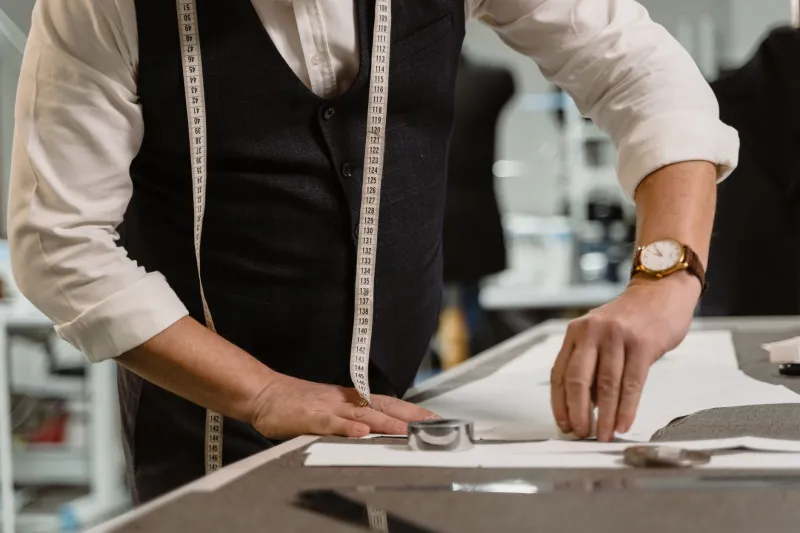
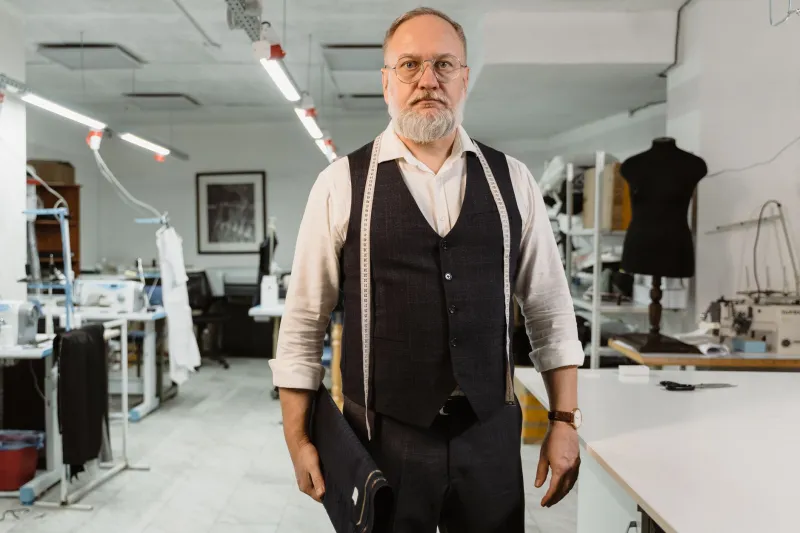
Counterfeit Couture: A Discerning Client's Guide to Verifying What Is Truly Handmade
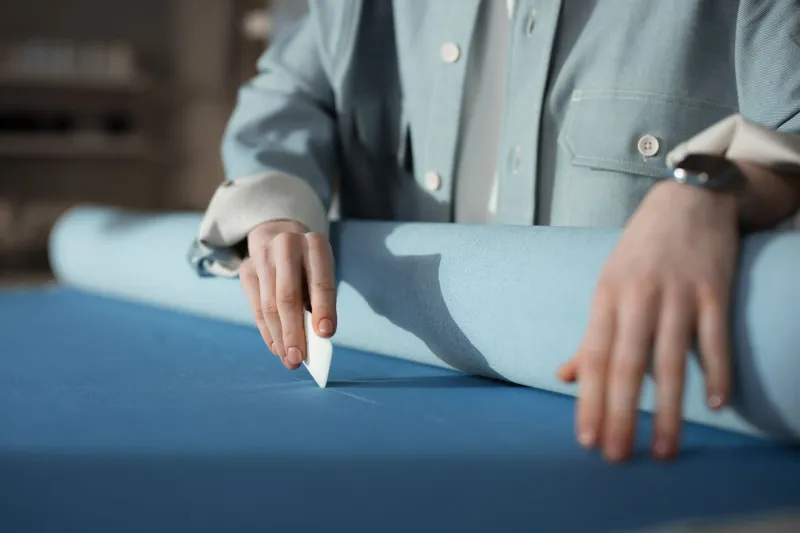
The phrase "bespoke" has never been more widely used—or more loosely applied. As demand for genuine handcraft has grown among American luxury consumers, so too has the number of garments and studios willing to claim the language of couture without the substance to support it. Terms that once carried precise technical meaning—bespoke, made-to-measure, handcrafted, atelier—have been stretched, diluted, and in some cases entirely appropriated by operations whose actual production methods bear no resemblance to what those words have historically described.
For the client investing meaningfully in a wardrobe built on genuine craftsmanship, this erosion of language represents a real problem. Knowing the difference between a garment that is truly bespoke and one that merely wears the designation is no longer a matter of connoisseurship alone. It is a matter of protecting a significant financial and personal investment.
Understanding the Language Before You Invest
The first step in any authentication process begins before a single garment is examined. It begins with understanding what the terminology actually means—and what it does not.
"Bespoke," in its strictest sense, refers to a garment cut from a paper pattern drafted specifically for one individual body, constructed largely by hand, and fitted across multiple appointments before completion. The pattern belongs to the client. The process is iterative. The result is a garment that could not have been made for anyone else.
"Made-to-measure," by contrast, begins with an existing block pattern that is adjusted to accommodate a client's measurements. The process is faster, less expensive, and considerably more automated. It can produce excellent results, but it is not bespoke—and any studio that uses the terms interchangeably is either confused or misleading you.
"Handcrafted" and "artisanal" are the most elastic of these designations, and the most susceptible to misuse. They carry no technical definition and can be applied to virtually anything without legal consequence. A garment assembled on an industrial production line can, in the loosest possible sense, be described as handcrafted if a human being attached the buttons. This does not make it so.
The Forensics of True Handwork
Once you understand the terminology, you can begin to examine the garment itself. Genuine handwork leaves a specific kind of evidence—and that evidence, once you know how to read it, is not easily faked.
Examine the stitching closely. Machine stitching is uniform to a degree that human hands cannot replicate. Stitches are perfectly even in length and tension, without the subtle variations that characterize work done by hand. In a genuinely handmade garment, the basting lines, pad stitching, and finishing work will show slight irregularities—not imperfections in the pejorative sense, but the natural signature of a skilled human hand moving through cloth. This is especially visible in the lapel construction of a tailored jacket, where pad stitching should be apparent on the underside.
Inspect the canvas. A true bespoke jacket contains a floating chest canvas—a layer of interfacing that is hand-stitched to the fabric rather than fused with heat and adhesive. To test for this, pinch the fabric at the chest between your fingers and move the outer layer slightly. If the canvas moves independently of the fabric, it is floating. If the layers move as one, the jacket has been fused—a construction method common in industrial production and incompatible with genuine bespoke.
Look at the buttonholes. Worked by hand, a buttonhole has a distinctive texture and a slight irregularity that machine finishing cannot reproduce. The thread should show a consistent twist, and the bar tacks at each end should be firm and compact. A sleeve buttonhole that actually functions—that opens and closes rather than serving as decoration—is a further indicator of genuine tailoring, though not definitive on its own.
Consider the lining. In a bespoke garment, the lining is typically set by hand, with a small amount of ease built in so that it moves with the wearer rather than pulling against the outer fabric. The attachment points should show hand stitching, particularly along the hem and at the sleeve head.
The Documentation Question
Authentication does not end with the garment. A reputable atelier maintains records—paper patterns, fitting notes, fabric samples, correspondence—that constitute a verifiable history of the commission. This documentation is not merely administrative. It is the provenance of the piece, and it is what distinguishes a genuine bespoke garment from an excellent imitation.
When commissioning from a new studio, ask directly about their documentation practices. A maker who cannot or will not tell you where your pattern will be stored, how your fitting notes will be recorded, or what records will accompany the finished garment is a maker who may not have a genuine bespoke process to document.
For garments already in your possession—whether recently acquired or inherited—provenance research may require more effort. Seek out the original studio if it still operates. Request records. If the studio has closed, former staff can sometimes be located through professional networks and may retain copies of original patterns or correspondence.
Red Flags Worth Knowing
Certain claims, when encountered in a studio's marketing or during a consultation, warrant careful scrutiny.
A studio that promises delivery in fewer than four weeks for a garment described as fully bespoke is almost certainly describing something other than what the word means. Genuine bespoke construction—with its multiple fittings, hand-finishing, and custom pattern work—requires time that cannot be compressed without compromising the process.
A price point significantly below the established range for genuine bespoke work in your market is another signal worth heeding. The cost of bespoke reflects the cost of skilled labor, quality materials, and time. A garment offered at a fraction of the expected price is, by definition, a garment from which something has been removed.
Finally, a studio that is reluctant to show you its workroom, introduce you to the people who will make your garment, or explain its construction methods in specific detail is a studio with something to protect. Transparency is not merely a courtesy in the atelier relationship. It is a professional obligation.
Building a Relationship That Protects Your Investment
The most reliable authentication is not forensic—it is relational. A client who has developed a genuine, ongoing relationship with her maker, who has been present at multiple fittings, who knows the names of the people who cut and sewed her garment, and who holds the documentation of each commission, is a client who does not need to wonder whether what she owns is authentic. She was there when it was made.
This is, ultimately, the deepest value of the bespoke relationship: not merely a beautiful garment, but an unbroken chain of knowledge connecting the finished piece to the hands that made it. In a market increasingly crowded with claims it cannot support, that chain is worth more than any label.