When Silence Becomes a Disservice: The Maker's Obligation to Speak
There is a particular kind of client who arrives at an atelier with absolute certainty. The fabric has been chosen, the silhouette decided, the buttons selected from a reference image saved months ago. They have done their research. They are confident. And in many respects, that confidence is something to be honored.
But confidence, even when well-founded, is not the same as expertise. And in the quiet rooms where bespoke garments are conceived, the most consequential moment is not the first fitting or the final delivery. It is the moment when a maker must decide whether to speak or to remain silent.
The Comfortable Illusion of Pure Service
Much of the contemporary language around bespoke tailoring emphasizes deference. The client is sovereign. Their vision is sacred. The atelier's role, in this framing, is essentially technical—to translate desire into cloth with precision and discretion.
This is not entirely wrong. Respecting a client's autonomy is foundational to the bespoke relationship. A maker who overrides every instinct a client brings is not a collaborator but a tyrant. Yet the opposite extreme—a maker who never offers a contrary perspective—is something equally troubling: a craftsperson who has confused agreement with service.
Several senior tailors working across American cities have described this tension in remarkably similar terms. The word that comes up repeatedly is stewardship. They do not see themselves as order-takers, nor as artists imposing their aesthetic on a paying patron. They see themselves as stewards of a process that, when honored fully, produces something neither party could have imagined alone.
What Pushback Actually Looks Like
The idea of an atelier "challenging" a client's taste can sound confrontational, even arrogant. In practice, it is almost never that.
Consider the client who insists on a lapel width that flatters neither their frame nor the weight of the cloth they have selected. A maker who says nothing and proceeds has, technically, fulfilled the commission. But they have also withheld something valuable—the kind of observation that only comes from years of studying how fabric moves, how proportion shifts under light, how a single structural decision can either elevate or diminish the whole.
The most skilled ateliers describe these moments not as corrections but as offerings. A second perspective, presented gently and without pressure, that the client is free to accept or decline. "I always tell them what I see," one New York-based tailor explained. "Then the choice is entirely theirs. But I owe them that conversation."
This is the crux of the matter. The obligation is not to override—it is to inform. A client who proceeds with their original vision after hearing a considered alternative has made a genuinely informed choice. A client who proceeds because their maker said nothing has been, in some meaningful sense, underserved.
The Moments That Define the Relationship
Not every commission presents this kind of tension. Many clients arrive with instincts that align beautifully with their measurements, their lifestyle, and the possibilities of the cloth. The maker's job in those cases is simply to execute with excellence.
But experienced ateliers can often identify the commissions that require a more active conversation. They tend to share certain characteristics: the client is working from a strong external reference (a photograph, a garment worn by someone else, a style from a different decade); the chosen fabric and the desired construction are subtly at odds; or the client's stated goal and their actual wardrobe needs are in tension.
In these situations, restraint is not professionalism. It is avoidance.
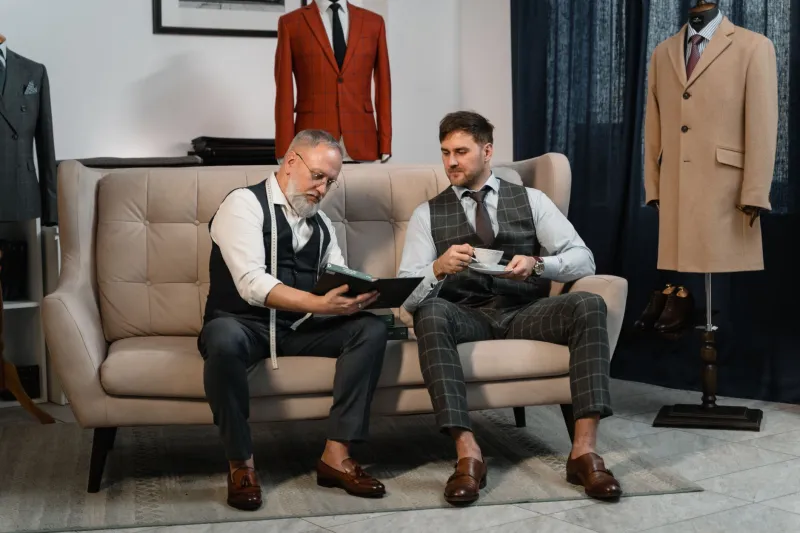
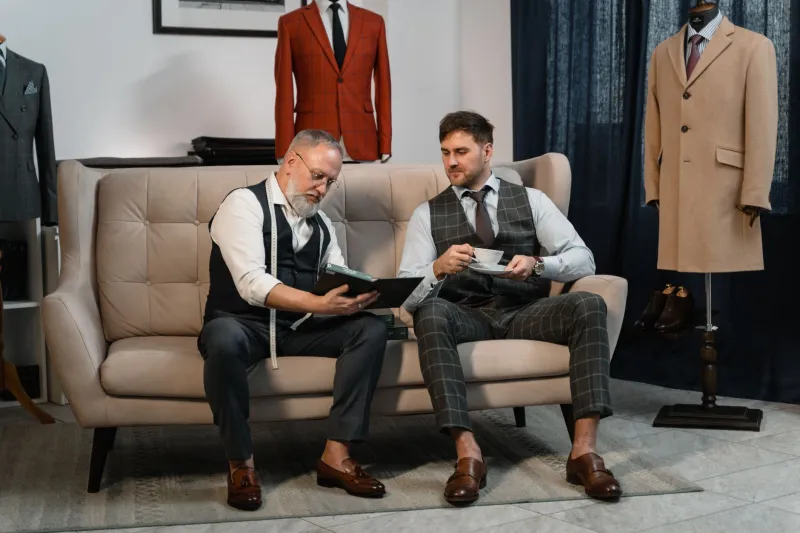
One California-based couture house describes a standing practice of what they call the "second session"—a meeting scheduled after the initial consultation, before any cutting begins, in which the maker presents their honest read of the commission alongside the client's original brief. Not as a challenge, but as a full picture. Clients, they report, almost universally appreciate it.
Trust Is Built Through Honesty, Not Compliance
There is a deeper reason why the most enduring atelier relationships are built on honest exchange rather than seamless agreement. Trust, in any relationship of consequence, requires evidence that the other party will tell you something you might not want to hear.
A maker who only affirms is a maker whose affirmations eventually lose their meaning. When they say the cloth is extraordinary, you wonder whether they would say the same about anything you brought them. When they say the fit is perfect, you find yourself searching for the flaw they might be too polite to name.
Conversely, a maker who has respectfully pushed back on one decision earns credibility that extends across every subsequent one. Their praise becomes reliable. Their enthusiasm becomes a signal rather than a courtesy.
This is what the most sophisticated clients understand instinctively. They do not seek ateliers who will simply execute. They seek ateliers who will engage—who will bring their full knowledge to bear on every commission, even when that means a moment of productive friction.
The Art of Saying It Well
None of this excuses clumsiness. The manner in which a maker offers a contrary perspective matters enormously. Delivered poorly, even the most valid observation can feel like a dismissal of the client's intelligence or taste.
The most effective practitioners tend to frame their observations in terms of the garment's potential rather than the client's error. "This cloth has a quality that I think we might be underusing" is a very different conversation from "that won't work." The former invites collaboration; the latter shuts it down.
Language, tone, and timing all matter. So does the recognition that some clients, on some commissions, have already made their peace with a particular choice and are not seeking to revisit it. Reading that accurately is itself a form of expertise.
But when the moment is right—when a client is genuinely open and the maker has something genuine to offer—silence is not tact. It is a missed opportunity to do what bespoke, at its most essential, is meant to do: produce something better than either party could have produced alone.
The conversation that never happens is not the one that was unnecessary. It is the one that both parties would have valued, had someone been willing to begin it.