The Case Against Forever: In Defense of Clothes With a Date Stamp

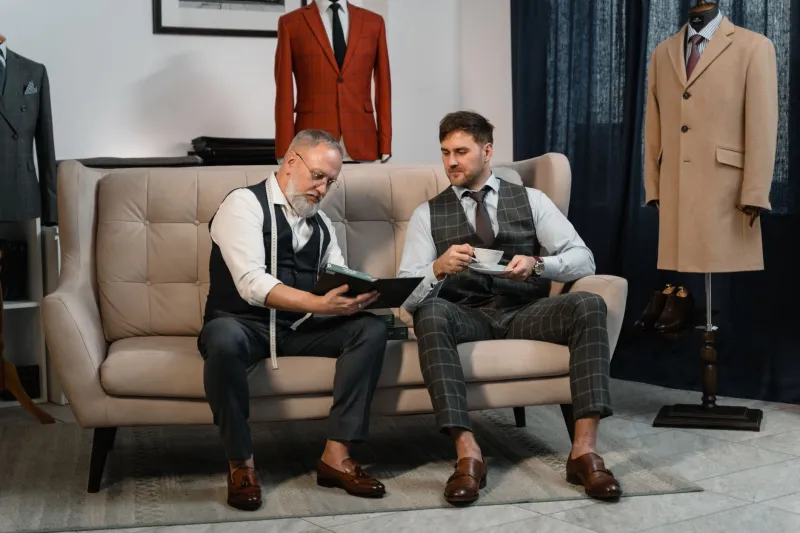
Photo: luxury bespoke wardrobe personal style tailoring detail, via img.freepik.com
Timelessness is a useful servant and a poor master. In recent years, American clients have been taught to evaluate bespoke and couture commissions by a single question: Will I wear this forever? The question has virtue. It discourages impulse, encourages material quality, and respects the cost of true craftsmanship. But when forever becomes the only criterion, something subtle is lost. The wardrobe becomes a museum of safe decisions. The client becomes a custodian of anonymity.
The Seduction of the Safe Choice
A garment designed to be timeless is usually a garment designed to avoid offense. It favors navy over aubergine, a moderate lapel over a pronounced one, a classic silhouette over an experimental line. These are not bad choices. They are simply choices that have been stripped of a specific point of view. The result may be elegant, but it may also be forgettable.
This is the paradox of investment dressing. The client spends more to buy better, then narrows the field of what he is willing to commission. He avoids the very garments that would make his wardrobe distinctive because those garments might not be appropriate in ten years. The logic is financially cautious and stylistically timid. It treats personal style as a risk to be managed rather than a self to be expressed.
Forever Is a Fiction Anyway
No garment is truly timeless. Even the most classic suit reflects the proportions of its era. A jacket cut in 2026 will carry the subtle signatures of 2026—the shoulder line, the lapel width, the trouser rise—just as a jacket cut in 1968 carried its own. This is not a flaw. It is the nature of clothing made for a living body in a particular culture.
To pretend otherwise is to confuse permanence with relevance. A garment can be well made and still belong to its moment. In fact, the best garments often do. They are not attempts to escape history. They are documents of a particular time, made with skill and worn with intention. The date stamp is not an embarrassment. It is a form of honesty.
Clothes That Remember
There is a reason clients remember certain commissions more than others. It is rarely the most neutral garment. It is the jacket in a cloth that caught the light in a particular way, the coat commissioned for a specific trip, the dinner suit that marked a change in a client's life. These garments carry memory because they were not designed to be universally appropriate. They were designed to be specifically theirs.
An atelier understands this instinctively. The maker who works closely with a client is not only solving a problem of fit. He is interpreting a moment. A client may request a garment for a season of transition—a new role, a move, a marriage. The garment that results may not be the most timeless thing in the wardrobe. It may be the most meaningful.
The Beauty of the Slightly Wrong
There is a prejudice in luxury dressing that every choice must be correct. The lapel must be exactly proportioned; the cloth must be beyond reproach; the silhouette must be above criticism. This is an understandable prejudice, but it can produce a certain stiffness. Some of the most stylish people in America have wardrobes that include a beautiful imperfection: a color that is a little too bold, a cut that is a little too personal, a detail that would not survive a committee.
These imperfections are not errors. They are signatures. They signal that a human being made a choice, not that a focus group approved one. In bespoke, this is the difference between a garment that fits and a garment that belongs. The former is a technical achievement. The latter is a relationship.
Commissioning for a Moment
The case against forever is not a case for disposability. It is a case for specificity. A client can still commission with longevity in mind, but he should also permit himself to commission for a mood, a season, or a risk. A cloth chosen because it is beautiful rather than because it will never date. A cut chosen because it flatters a particular posture rather than because it is universally correct. A garment chosen because it marks a moment rather than because it will outlive every moment.
This is not an argument for novelty. It is an argument for presence. The client who commissions for a specific moment is often more engaged with the process, more attentive to the maker's advice, and more likely to wear the garment with pleasure. The result is not a museum piece. It is a living part of the wardrobe.
An Enduring Wardrobe, Not a Timeless One
The most enduring wardrobes are not composed entirely of neutral, forever garments. They are composed of pieces that have been loved, worn, repaired, and remembered. Some of those pieces are classic. Others are eccentric. Together they form a portrait of a person rather than a checklist of correct choices.
The atelier's role is not to enforce timelessness. It is to help the client make garments that are worth keeping. Worth keeping is a more generous standard than forever. It allows for beauty, risk, and a little imperfection. It allows for clothes with a date stamp—and with a story.