Listening Before Measuring: What a Workshop's Soundscape Reveals
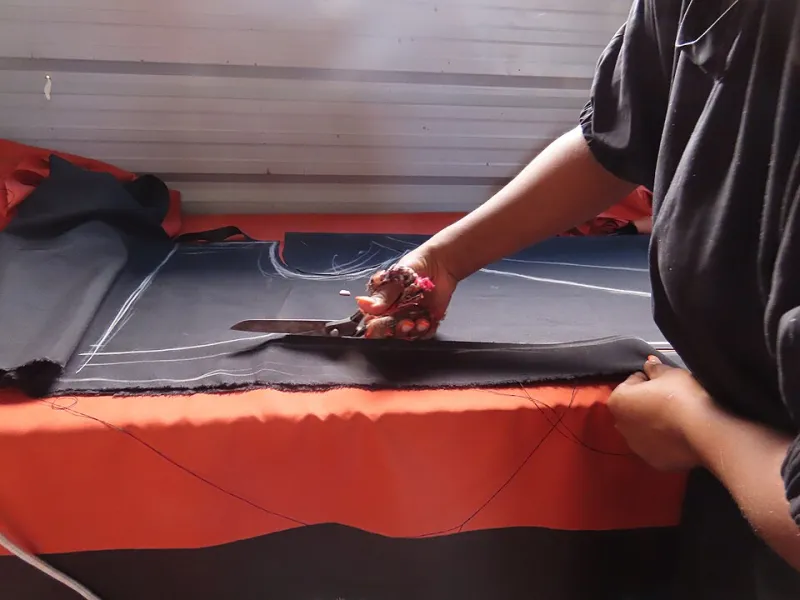
Photo: Martin Hipangwa, CC BY-SA 4.0, via Wikimedia Commons
Before the tape measure leaves its case, the room has already told you something.
The Diagnostic Ear
Most clients visit an atelier with their eyes. They study the cloth, the samples, the framed photographs. The ears are left at the door, and yet the soundscape of a workshop is one of the more honest signals available to a visitor. It cannot be staged as easily as a showroom, and it changes the moment the work begins.
Rhythm, Not Speed
Listen first for rhythm. A skilled cutter moving shears through cloth produces an even, deliberate sound — a long stroke, a pause, another stroke. The rhythm reflects judgment: where to stop, when to pivot, how much force a particular cloth will take. A frantic, uneven sound is not necessarily incompetence, but it is worth noticing. Speed in a cutting room is often the sound of a house that has accepted too much work.
The Hush of the Hand
Hand-sewing is quiet. A tailor pad-stitching a lapel produces almost no sound at all — a soft brush of needle and thread, the occasional snip. A room where that quiet is concentrated, where several people are working in near silence, is usually a room where the difficult work is being done. Do not mistake this quiet for inactivity. It is the sound of attention.
When Silence Misleads
The quietest room is not always the most skilled. A showroom is silent because nothing is being made. A workshop can fall silent because the work has stopped — a delivery is late, a specialist is unavailable, a dispute is underway. And a very quiet atelier may simply be one where the handwork happens elsewhere, in another building or another country. Silence is a clue, not a verdict.
Machines Have Accents
The loudest rooms are usually the machine rooms: the steady hum of a lockstitch, the punctuation of a buttonhole machine, the brief violence of a felling machine. None of this is disreputable. Most ateliers use machines where machines are appropriate, and a house that claims never to touch one is either very small or not telling the truth. The question is not whether machines exist but whether their sound dominates the room. When the machines run constantly and the handwork is nowhere to be heard, ask where the finishing is done.
The Sound of a Deadline
A deadline has a sound of its own. It is the sound of a cutter working through lunch, of two people speaking over one another at the pressing table, of a telephone left unanswered because everyone is at the bench. Some of that intensity is normal in any working season. What matters is whether it resolves. A house that sounds hurried for a week is a house with a schedule. A house that sounds hurried every time you visit is a house in trouble.
The Etiquette of Listening
Listening is not the same as loitering. A visitor should not stand at a bench and watch a tailor work without permission, and should not record the room on a phone. Ask whether you may observe for a few minutes; most houses will say yes, and the answer itself is informative. Notice, too, how the staff speak to one another. A room where a question is answered without irritation is a room where the work is not being rushed.
What to Do With What You Hear
Sound is not proof. It should be treated as a prompt for a question, not a conclusion. If the room sounds hurried, ask about the delivery schedule. If it sounds too quiet, ask where the finishing is done. If it sounds like a factory, ask which stages are handled in-house. The answers will either confirm what you heard or complicate it, and both outcomes are useful.
The Visit, Reconsidered
The most reliable ateliers tend to sound like workshops: a mix of quiet handwork, measured machine work, and conversation that stops when a difficult operation begins. That combination is difficult to fake and easy to recognize once you know what you are hearing. Bring your eyes to the cloth, by all means. But bring your ears as well — they will tell you something the samples cannot.