Manners Before Measurements: The Unwritten Etiquette of the Bespoke Atelier

Photo: bespoke tailor consultation client fitting room etiquette, via wallpapercave.com
The bespoke atelier is a formal place, but its formality is not decorative. It is functional. The cutting table, the fitting room, and the consultation chair each impose their own rhythm, and the client who understands that rhythm receives better work. This is not a matter of snobbery. It is a matter of recognizing that couture and bespoke tailoring are collaborative crafts, and collaboration has etiquette.
The following ten conventions are rarely printed in an atelier's welcome materials. They are learned, observed, and occasionally violated. They are offered here not as a test of worthiness but as a practical guide for the discerning client who wishes to be a constructive participant in the making of a garment.
1. Treat the First Appointment as a Conversation, Not a Transaction
The first consultation is not a sales counter. It is a diagnostic conversation. The client who arrives with a finished specification—exact cloth, exact cut, exact button—may believe he is being efficient. In fact, he may be closing off the maker's ability to advise. A better approach is to arrive with a purpose and an openness. Explain the occasions, the existing wardrobe, and the frustrations that prompted the commission. Let the atelier ask questions. The garment will be better for it.
2. Respect the Fitting Room's Silence
A fitting room is a place of concentration. The maker is reading the garment; the client is being read. Idle conversation, phone calls, and commentary from companions can interrupt this work. This does not mean the client must be mute. It means the client should recognize that silence in a fitting is not awkwardness. It is often the sound of a trained eye making a judgment.
3. Give Feedback in Observations, Not Verdicts
A client who says, 'This is wrong,' gives the maker little to work with. A client who says, 'I feel pressure under the left arm when I reach forward,' gives the maker a diagnosis. The difference is significant. Observations invite correction; verdicts invite defense. The atelier is not sensitive to criticism, but it is best served by specificity.
4. Ask Before You Touch the Pins
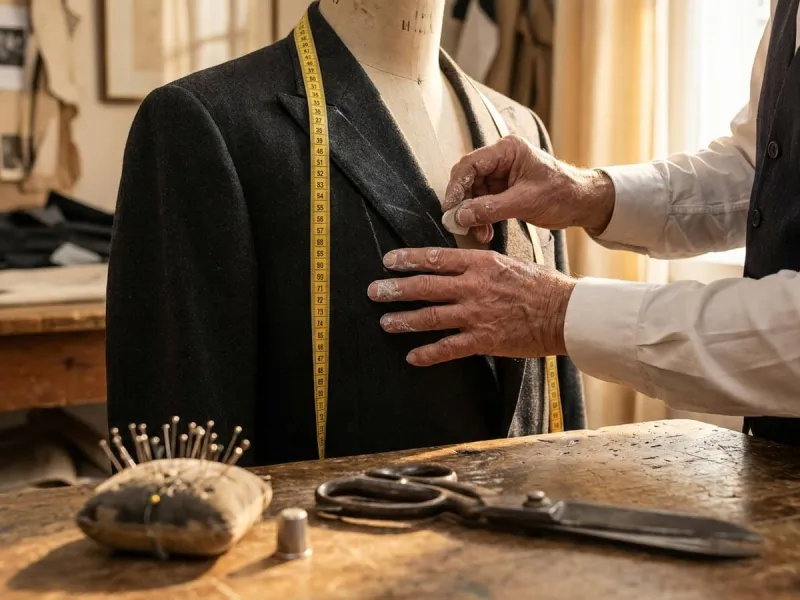
A pinned shoulder or a chalked seam is a working document. It is also a potential hazard. Clients should resist the urge to adjust a pin or smooth a fold without invitation. The maker has placed each pin for a reason, and a small movement can distort the evidence. If something feels uncomfortable, say so. Do not fix it yourself.
5. Understand the Meaning of a Pinned Shoulder
A pinned shoulder is not an unfinished mistake. It is a question posed in cloth. The maker may pin a shoulder to test a line, to raise or lower the sleeve head, or to evaluate balance. When a client sees a garment held together with pins, he is seeing the craft in its thinking stage. It is not a sign of disorder. It is a sign of precision under construction.
6. Do Not Rush the Cloth
Fine cloth has its own temperament. It may need to rest after cutting, to be pressed in stages, or to be handled with a particular care. A client who calls weekly for progress reports may believe he is demonstrating interest. In practice, he may be interrupting the very process he is paying for. The atelier should provide a realistic schedule. The client should respect it.
7. Keep Phone Calls for Business Hours
Bespoke ateliers are small operations. The person who answers the phone may also be the person who cuts the cloth. Calls at odd hours, on weekends, or during known fitting times are not a mark of importance. They are a disruption. The client who respects the atelier's working hours receives more attentive service, not less.
8. Bring the Shoes You Will Wear
A garment's balance begins at the floor. The height of a heel, the pitch of a sole, and the shape of a toe all affect how a trouser hangs and how a jacket sits. A client who arrives for a fitting in different shoes from those he intends to wear is asking the maker to solve a problem with incomplete information. Bring the intended shoes. It is a small courtesy with a large effect.
9. Accept That the Maker May Disagree
A good atelier is not an order-taking service. It is a house of expertise. If a client requests a very narrow lapel on a garment that requires visual weight, or a cloth that will not perform well in the intended cut, the maker may push back. This is not obstruction. It is professional judgment. The client should listen before insisting. He may still insist, but he should do so with the maker's concerns in view.
10. Leave Room for the Atelier's Judgment
The best commissions are not specifications delivered to a factory. They are partnerships in which the client provides the purpose and the maker provides the craft. A client who micromanages every seam and button may receive exactly what he asked for and still be disappointed. A client who leaves room for the atelier's judgment often receives something better than he could have specified.
Why the Code Matters
These conventions may seem small, but they protect something larger: the conditions under which careful work is possible. Bespoke tailoring requires concentration, continuity, and trust. The client who respects the atelier's etiquette does not diminish his own authority. He strengthens the collaboration. In a world of instant transactions and constant accessibility, the atelier's unwritten code is not a relic. It is a quiet assertion that some things are still made properly, and that proper making has its own manners.